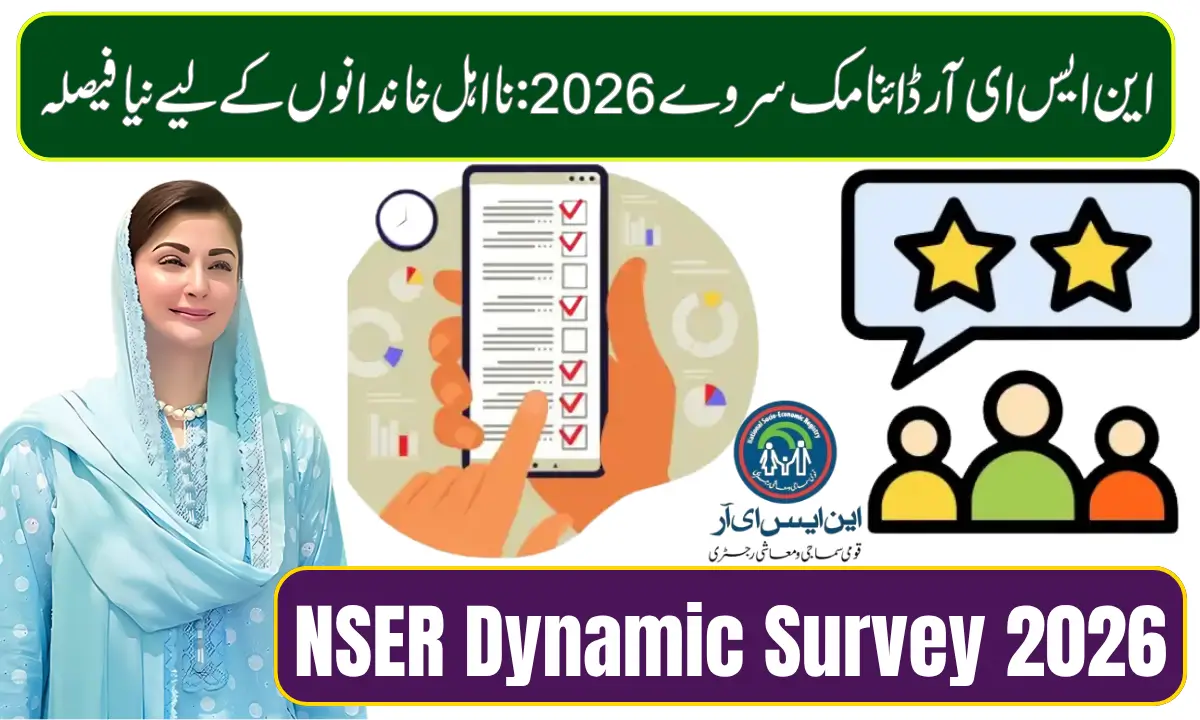
NSER Dynamic Survey 2026: Document Verification Process Begins for New Eligible Families
The National Socio-Economic Registry (NSER) in Pakistan has launched the document verification process for new eligible families under its Dynamic Survey 2026 initiative. This step is crucial for families seeking social protection programs, financial assistance, and other government support schemes. If you have recently been identified as eligible in the NSER database, this guide will walk you through the verification process step by step.
What is the NSER Dynamic Survey?
The NSER Dynamic Survey is an ongoing effort by the government to update household data across Pakistan. Unlike previous surveys, the dynamic survey ensures that newly eligible families are registered and verified for programs like Ehsaas, Benazir Income Support Program (BISP), and other social welfare initiatives.
The goal is to create a real-time, accurate database that identifies families in need of financial assistance. Families can benefit from cash transfers, healthcare support, and educational subsidies once their documentation is verified.
Who is Eligible for NSER Dynamic Survey Verification?
Eligibility is determined based on several criteria, including:
- Household income below the national poverty line
- Families with women, children, or elderly members in need
- Households without access to social safety programs
If your family qualifies, you will receive a notification from NSER officials or local authorities about the verification process.
Steps to Complete Document Verification
The document verification process for new eligible families is simple but requires careful attention to detail. Follow these steps:
Step 1: Receive Notification
Eligible families are informed via SMS, phone call, or through local union council offices. Make sure your contact information is updated in the NSER database.
Step 2: Collect Required Documents
Prepare the necessary documents for verification, which typically include:
- National Identity Card (CNIC) of the head of the family
- B-Form or birth certificates of children
- Utility bills or proof of residence
- Any other supporting documents required by local authorities
Step 3: Schedule Verification Appointment
Some areas require an appointment at local verification centers, while in other regions, verification may be conducted at your home by NSER field staff.
Step 4: Verification Visit
During the verification visit, NSER officials will cross-check your documents, record family details, and confirm eligibility for social programs.
Step 5: Receive Confirmation
Once verification is completed successfully, eligible families will receive confirmation of enrollment in the NSER database. This allows them to access government financial aid and welfare programs.
Tips for a Smooth Verification Process
- Ensure all documents are authentic and up-to-date
- Keep originals and copies ready for verification
- Respond promptly to NSER officials to avoid delays
- Update your contact information to receive notifications
Why Document Verification is Important
The verification process ensures that financial aid reaches the right families and prevents errors or misuse of funds. Verified families can easily access:
- Ehsaas Cash Program payments
- Health and nutrition support
- Education and school enrollment benefits
- Emergency financial assistance
By completing this process, families secure their place in social protection programs for the year 2026.
FAQs About NSER Dynamic Survey Verification
Q1: How will I know if my family is eligible for verification?
You will receive a notification from NSER officials via SMS, phone call, or through your local union council.
Q2: Can I complete verification online?
Currently, verification requires physical document submission, either at home or at local verification centers.
Q3: What documents are needed for NSER verification?
Key documents include CNIC, B-Form, proof of residence, and other family-related documents.
Q4: How long does the verification process take?
Typically, verification takes a few days to a couple of weeks, depending on the number of households in your area.